
Todas las subastas / Etnográfica / A wooden sculpture - Prampram - Ghana (No reserve price)

A wooden sculpture - Prampram - Ghana (No reserve price)
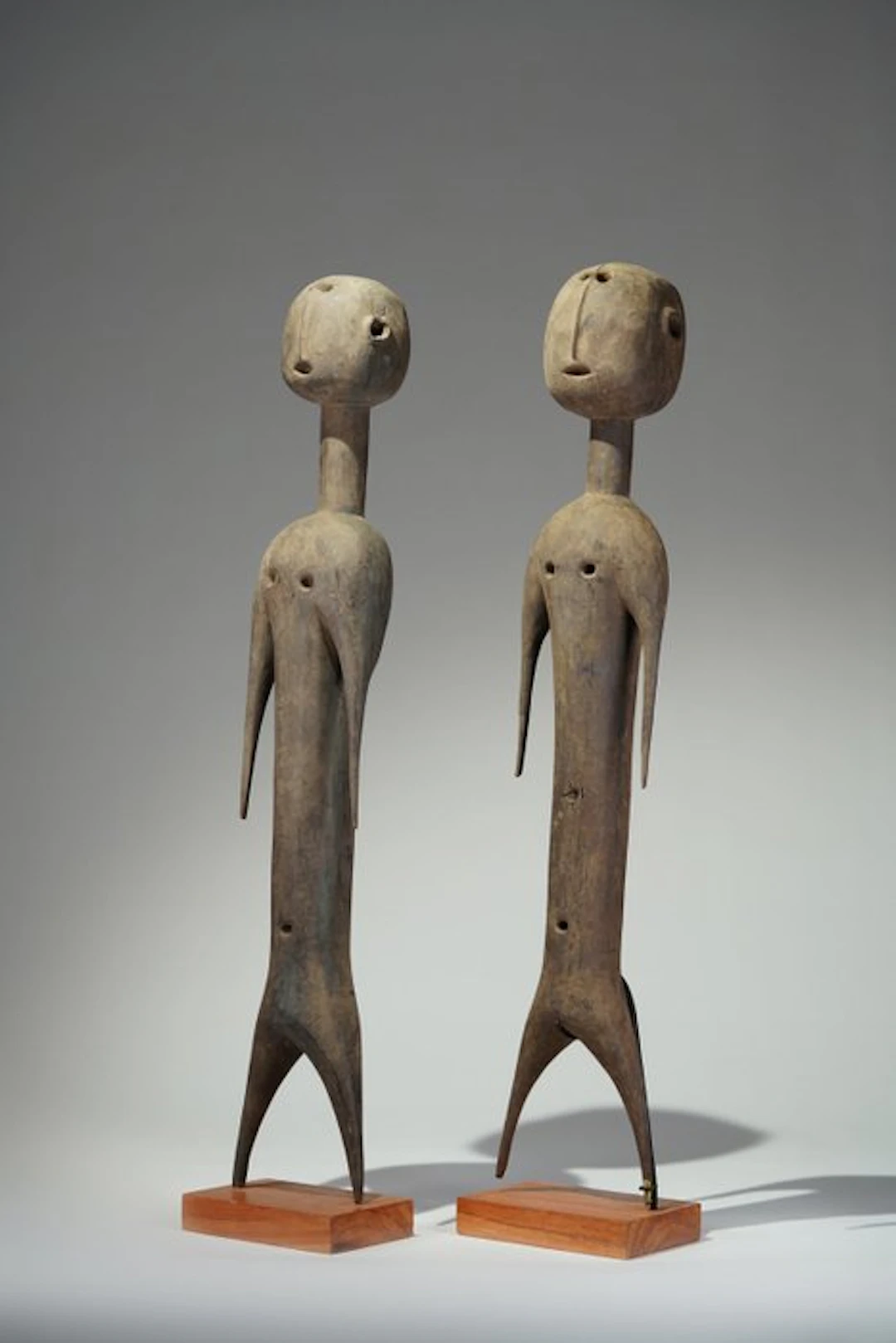
Prampram Figure Pair - Southern Ghana, incl stand. These two towering wooden figures are characterized by a radical formal reduction. From narrowly splayed legs emerge elongated, almost cylindrical bodies, from which thin arms hang close to the head. Long necks support disproportionately large, rounded heads. Eyes and mouth appear merely as small indentations, the nose as a narrow, incised or plastically suggested line. The chest and navel are also indicated by dot-like hollows. The matte, gray to earth-brown surface with occasional dark and reddish traces underscores the austere, archaic appearance of the figures. As a pair, the figures achieve a remarkable balance between individuality and repetition. The rarely documented Prampram sculpture tradition is attributed to southeastern Ghana and the cultural context of Ningo-Prampram. Comparable figures are also characterized by elongated bodies, slender limbs, and large oval or spherical heads. Some documented provenances point to the storage of such sculptures in shrine contexts; for pieces from Lectsoboi, there is also a local tradition that connects them with historical warrior figures. However, this specific interpretation cannot be applied to the entire group of works, which has thus far received little scholarly attention. The original function of this pair should therefore remain open to question without a confirmed field provenance. Literature (selection): B. K. Dogbe: “The Human Form as a Central Theme in Art”, Image, Kumasi 1977. Herbert M. Cole / Doran H. Ross: The Arts of Ghana. Los Angeles 1977. Marion Kilson: Kpele Lala: Ga Religious Songs and Symbols. Cambridge, Mass. 1971. THE PHOTO Prampram Figure Pair – Southern Ghana These two towering wooden figures are characterized by a radical formal reduction. From narrowly splayed legs emerge elongated, almost cylindrical bodies, with slender arms hanging close to the torso. Long necks support disproportionately large, rounded heads. Eyes and mouth appear merely as small indentations, while the nose is reduced to a narrow incised or subtly modelled line. The chest and navel are likewise indicated by dot-like hollows. Their matte surfaces, ranging from grey to earth brown with occasional dark and reddish traces, reinforce the figures’ austere and archaic presence. As a pair, they establish a remarkable balance between repetition and individuality. The rarely documented Prampram sculptural tradition is attributed to southeastern Ghana and the cultural context of Ningo-Prampram. Comparable figures are likewise distinguished by elongated bodies, slender limbs, and large oval or spherical heads. Some documented provenances suggest that such sculptures were kept in shrine contexts; for works from Lectsoboi, local traditions have also associated them with historical warrior figures. This interpretation, however, cannot be extended to the group as a whole, which has so far received comparatively little scholarly attention. Without a confirmed field provenance, the original function of this particular pair should therefore remain an open question. The photographic staging places the figures within an intentionally different visual environment. Ochre, deep blue, brick red, and muted white, together with the rigorous geometry of stairs, walls, openings, and cast shadows, evoke the chromatic and spatial vocabulary associated with Oskar Schlemmer and the Bauhaus. The architectural setting turns the image into a stage: one figure stands frontally at the top of the staircase, while the other appears farther away, silhouetted against an illuminated opening. Schlemmer’s exploration of the human figure in relation to geometry, architecture, and the stage inevitably comes to mind. Yet this resemblance belongs to the image created here, not to the historical identity of the sculptures themselves. It should neither imply a historical connection nor suggest that the Prampram figures can be understood as anticipating a Bauhaus aesthetic. Their historical timelines, cultural contexts, possible functions, and systems of meaning are fundamentally different. This distinction is particularly important in light of the history of European modernism. African works were repeatedly detached from their specific social, ritual, intellectual, and historical contexts and reframed as sources of a supposedly universal or “primitive” formal language through which European modernism could define its own innovations. The present juxtaposition seeks explicitly not to repeat that gesture of appropriation. It does not claim influence, descent, or equivalence. Instead, it constructs a temporary visual encounter between two autonomous histories of form. The affinities that become visible—elongation, reduction of the human body to elementary volumes, the tension between figure and architecture, repetition and variation—are therefore best understood as formal resonances produced by the photograph itself. The Bauhaus-inflected architecture belongs to the contemporary act of staging. The Prampram figures enter this space with their own material and cultural history, one that cannot be subsumed under the categories of twentieth-century European abstraction. Seen through Horst Bredekamp’s concept of the Bildakt (image act), the photograph consequently becomes more than a neutral setting or documentary representation. The image itself produces relations. Through perspective, colour, illumination, scale, and spatial distance, it activates the two sculptures as protagonists. The elevated figure confronts the viewer from the threshold above the staircase; the second, placed deep within the architecture and caught in backlight, appears simultaneously present and remote. Architecture, sculpture, light, and shadow together generate an event of seeing. At the same time, the figures resist complete absorption into this carefully constructed aesthetic order. Their unusual proportions, material surfaces, and unresolved original functions retain a degree of opacity. They cannot simply be transformed into “Bauhaus figures.” In Bredekamp’s sense, their presence may instead be understood as possessing an agency within the image: they do not merely receive the meaning imposed by their surroundings but alter the space into which they have been placed and, in doing so, act back upon the viewer. The photograph can thus be understood as an experiment in proximity without assimilation. It brings historically and culturally distinct visual systems into a momentary constellation while insisting on the distance between them. The comparison does not establish a genealogy. Rather, it allows similarity and difference to become perceptible at the same time. What emerges is not an image of African sculpture absorbed into the history of European modernism, but a visual encounter in which the Prampram figures maintain their autonomy—and through their presence transform the very modernist space that was constructed around them. Literature (selection): B. K. Dogbe, “The Human Form as a Central Theme in Art,” Image, Kumasi, 1977. Herbert M. Cole / Doran H. Ross, The Arts of Ghana, Los Angeles, 1977. Marion Kilson, Kpele Lala: Ga Religious Songs and Symbols, Cambridge, Mass., 1971. Some of the information and photos are generated by artificial intelligence and is based on published sources from the fields of ethnography, archaeology, and art history documents. All information and photos are protected by copyright. Inv. No. MAZ29533 Height: 97 cm / 98 cm Weight: 4,5 kg / 5,6 kg (incl. stand)
Estimación:€425
Ir a la subastaVer todos los artículos deCatawikioEtnográfica
Estimación:
€425
Artículos similares

Resultados de subastas para artículos similares
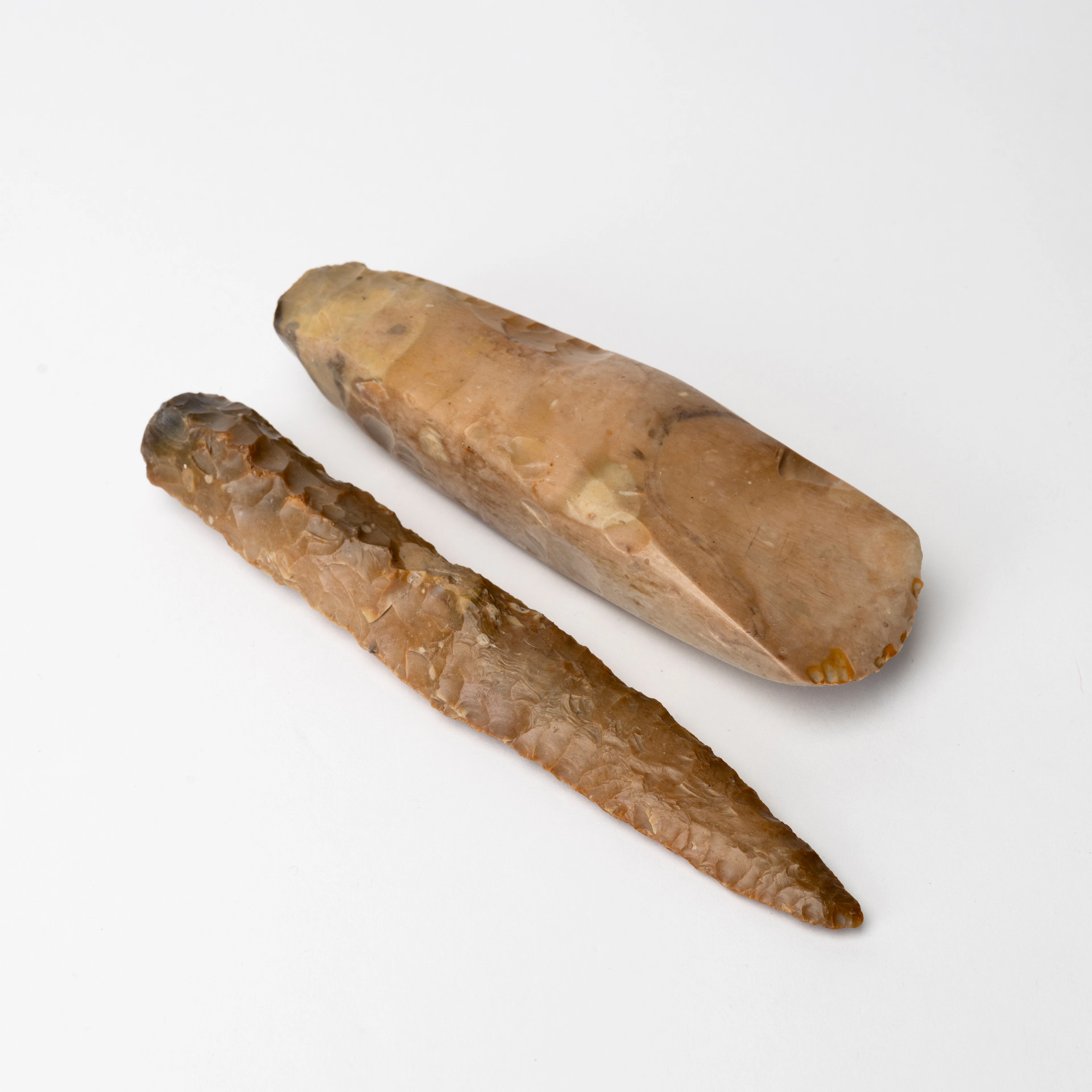
FLINTYXA samt FLINTDOLK, sannolikt yngre stenåldern, neolitikum.
10/08/2026
€326.32
Est.: €178.57
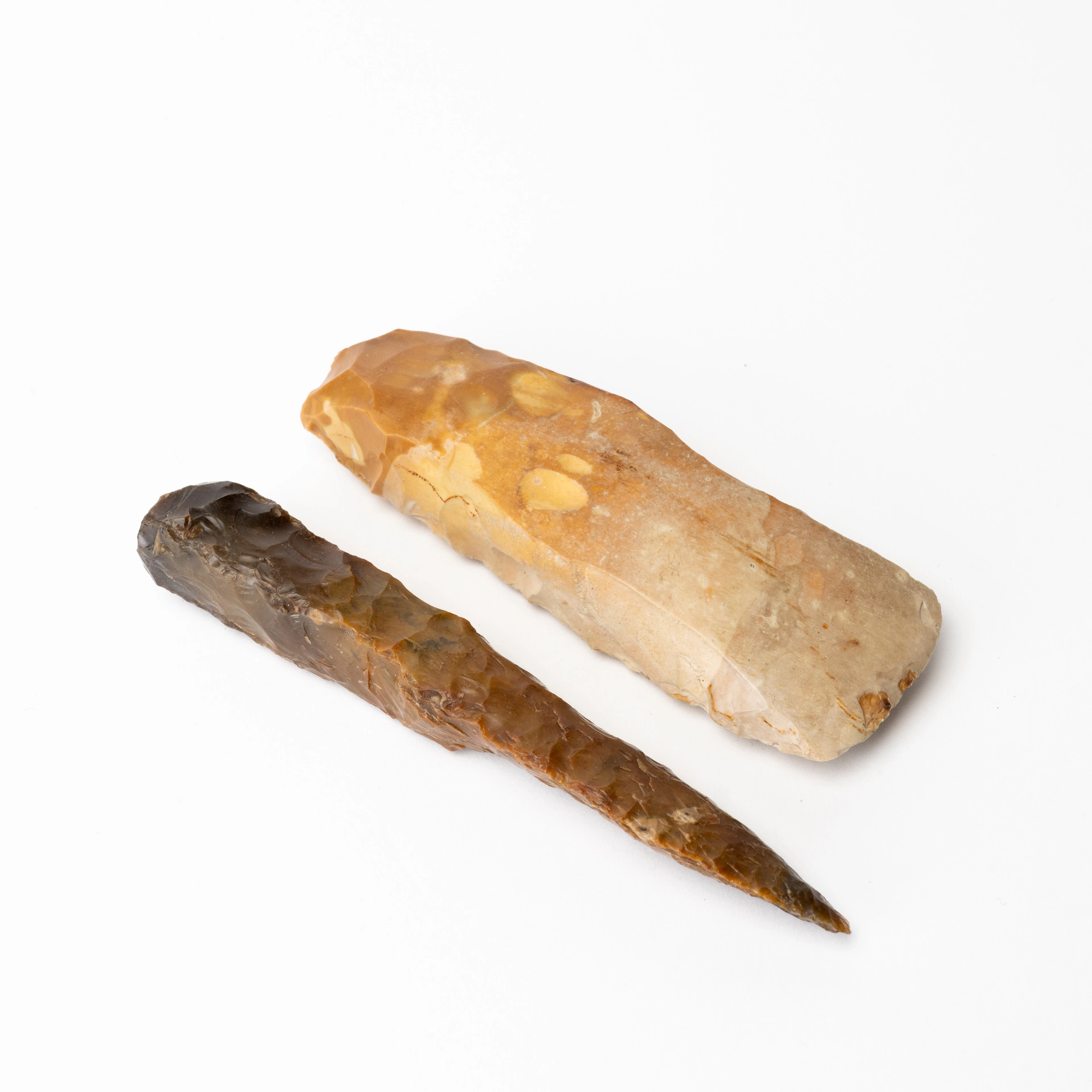
FLINTYXA samt FLINTDOLK, sannolikt yngre stenåldern, neolitikum.
10/08/2026
€129.51
Est.: €142.86
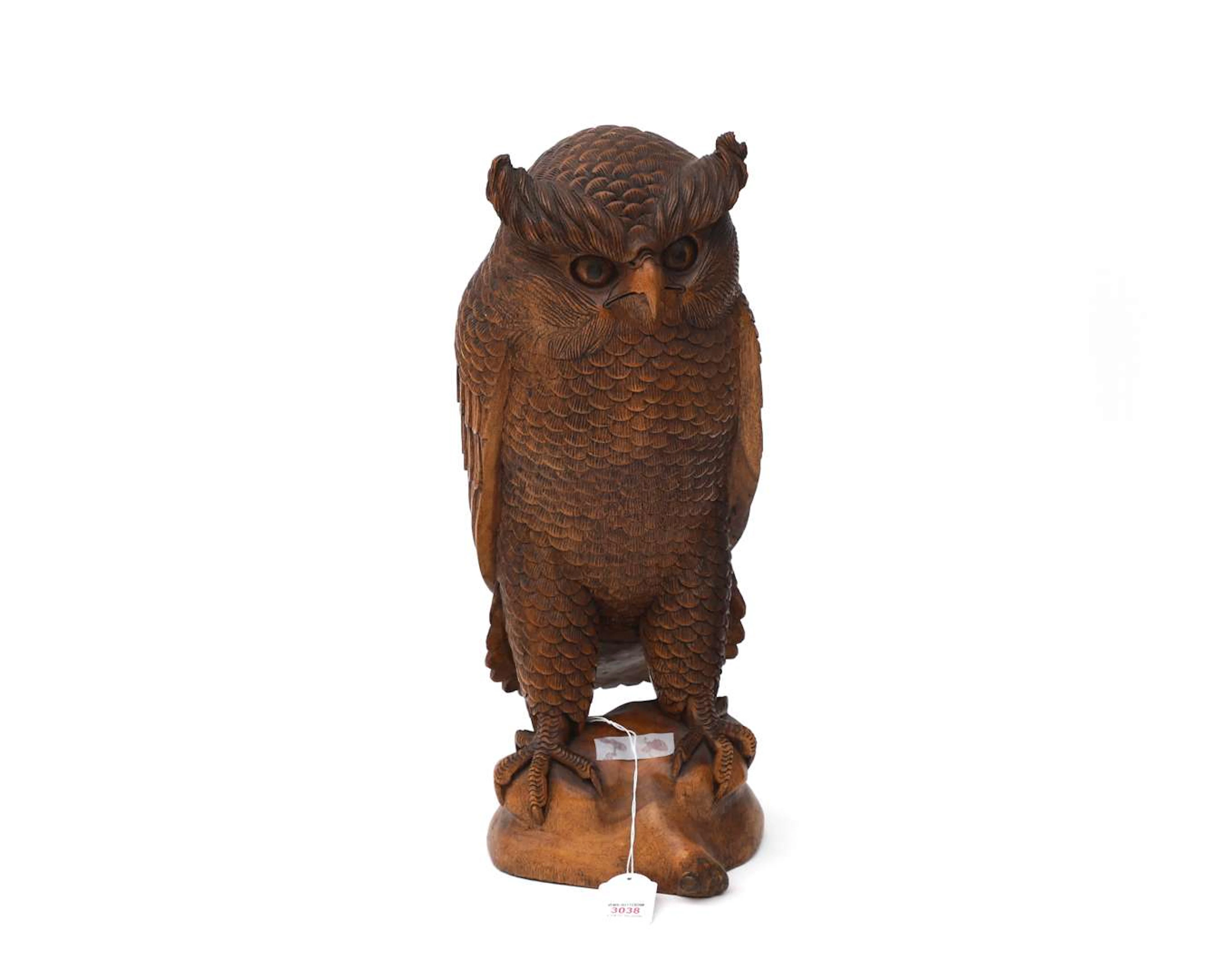

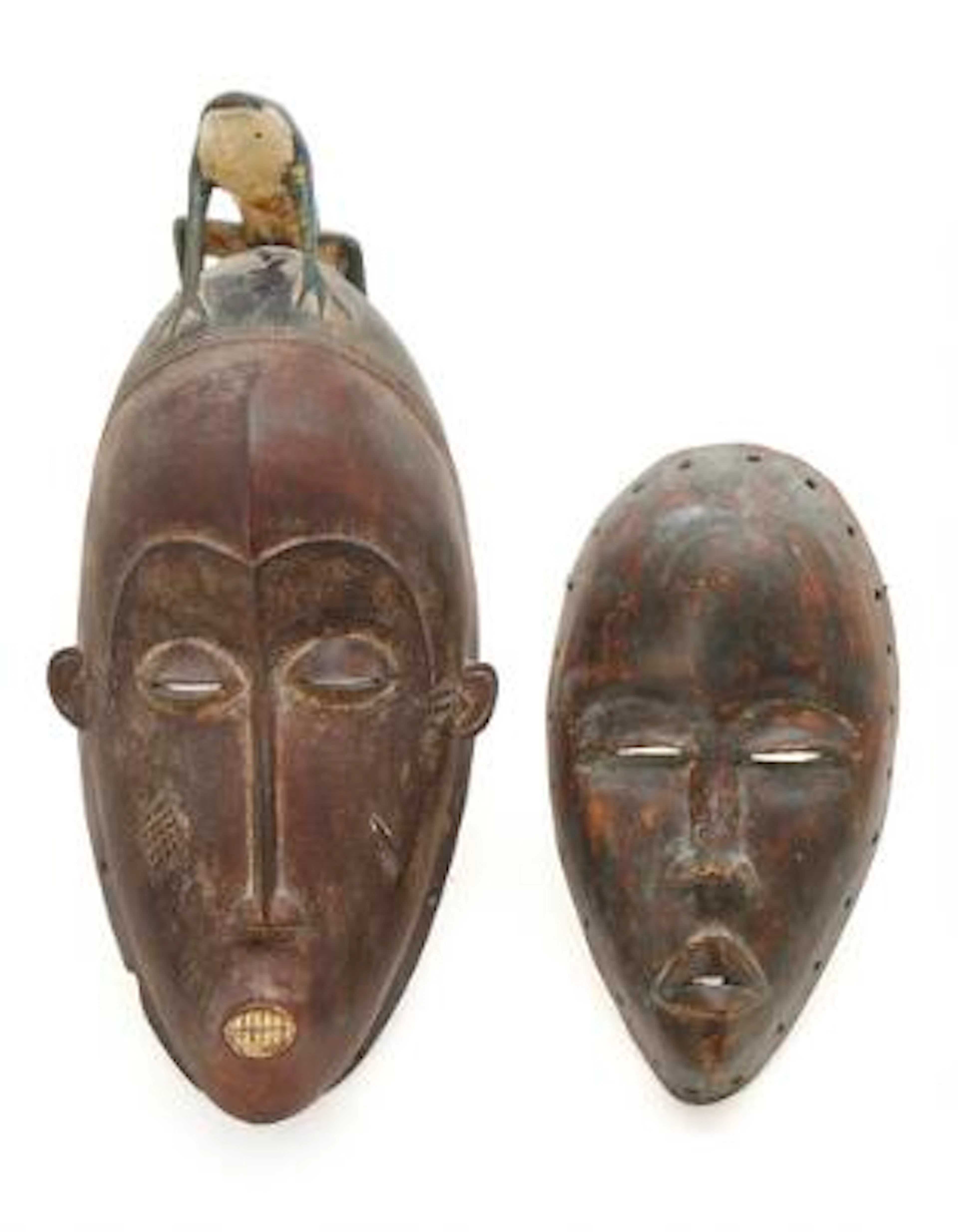
Two masks of carved patinated wood. Baoule and Dan style. H. 41 cm.
10/08/2026

€1,070.04
Est.: €535.08
¡Lleva tu subasta a coleccionistas de todo el mundo!
Publica ahora