

OCT 8 | 3:00 PM

¡Lleva tu subasta a coleccionistas de todo el mundo!
Publica ahoraAl suscribirte, aceptas la política de privacidad. Cancela tu suscripción en cualquier momento.
Barnebys HQ
Brahegatan 10
BOX 5038
114 37 Stockholm
Todas las subastas / Arte Antiguo / Ancient Greek

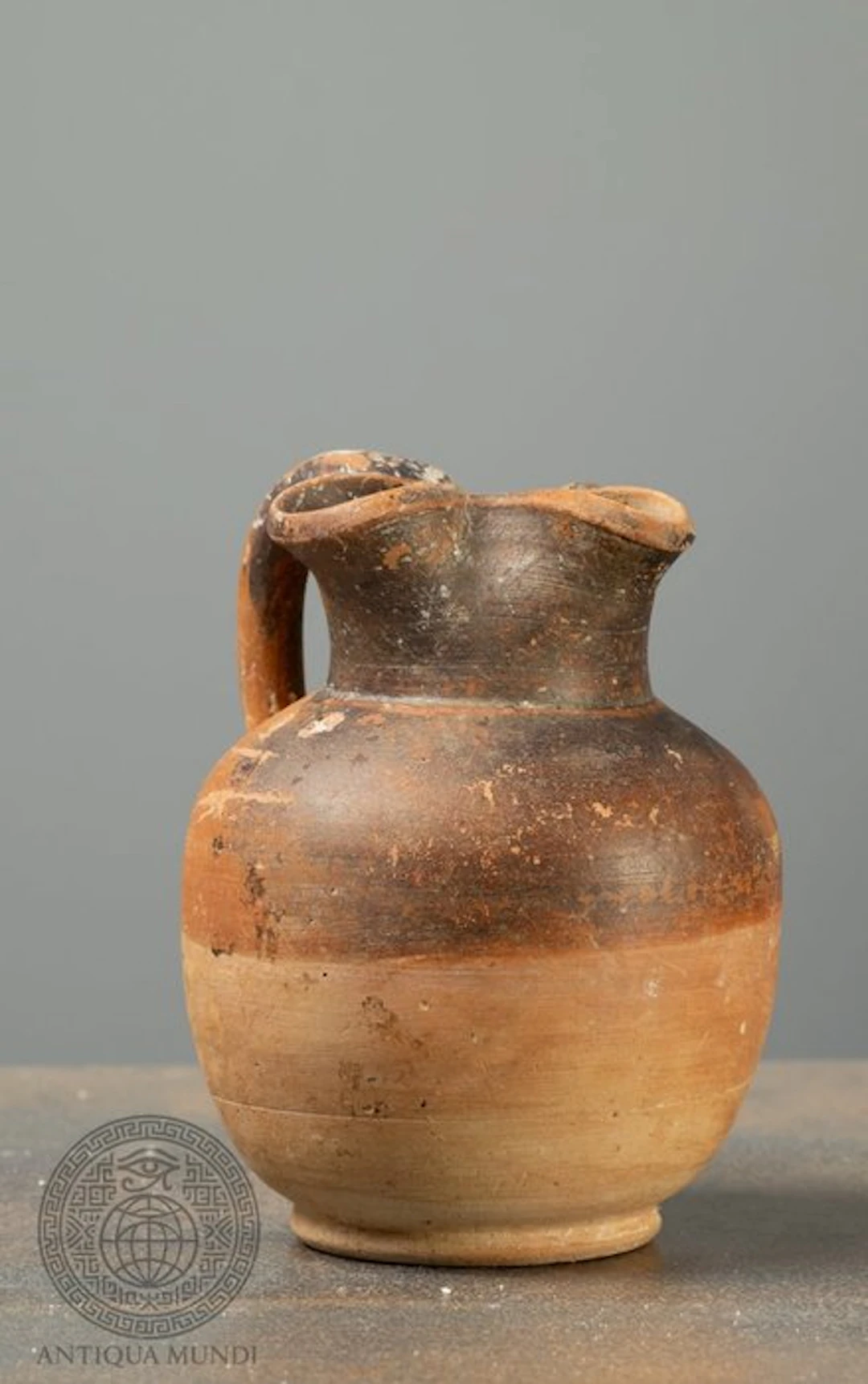
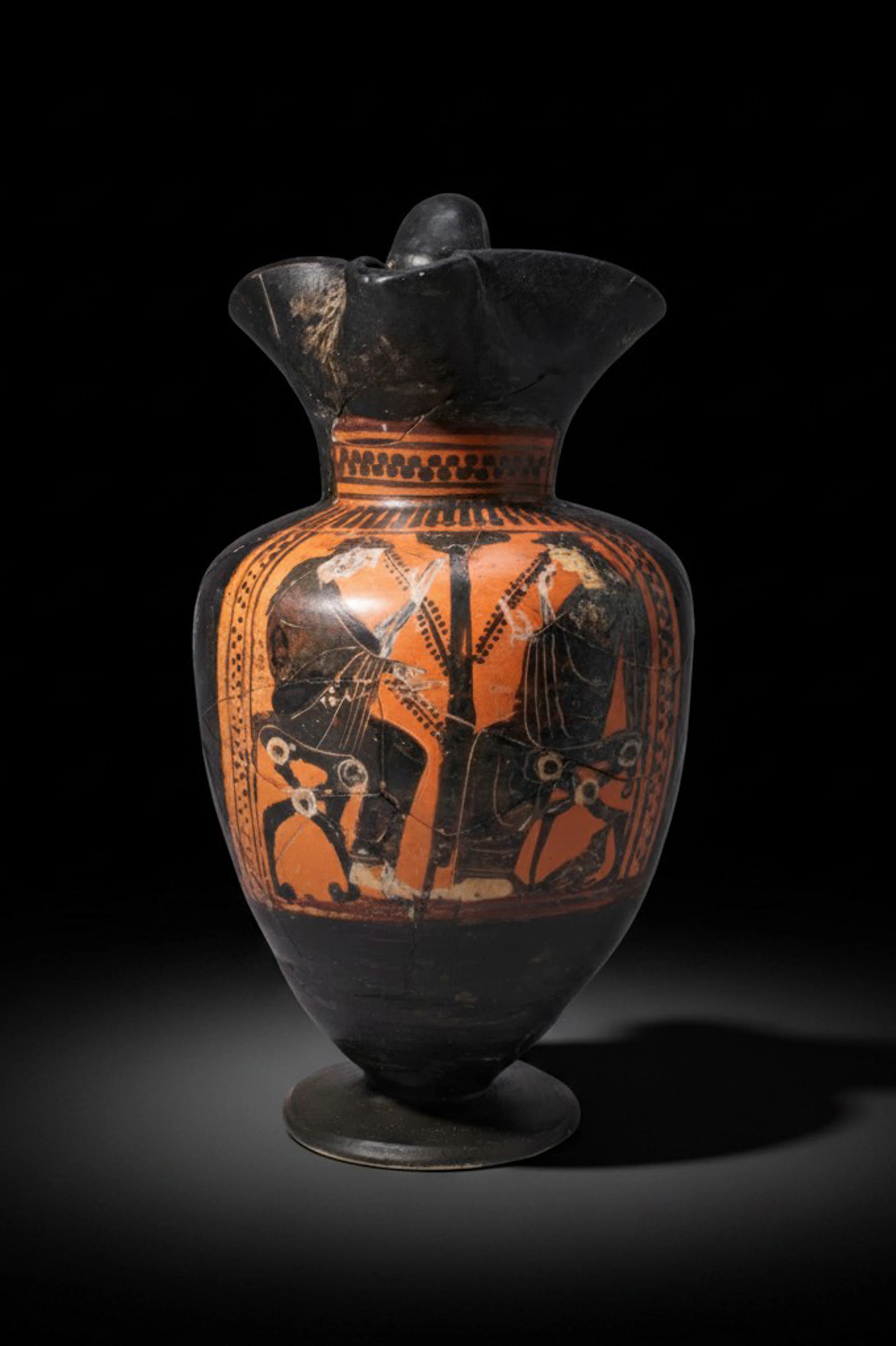
An attractive small Hellenistic terracotta oinochoe with a compact globular body, ring foot and characteristic trefoil-shaped mouth, dating to approximately the 4th–2nd century BC. The almost spherical body rises through a rounded shoulder into a short, distinctly constricted neck. The rim is drawn into three pronounced lobes, creating the characteristic trefoil mouth associated with this type of pouring vessel. A substantial vertical strap handle rises directly from the rim in a high curve and joins the shoulder of the vessel. Particularly attractive is the vessel’s two-tone surface treatment. The neck, shoulder and upper section of the body retain a dark brown to almost black slip, while the lower part of the vessel was largely left in the natural colour of the clay, displaying warm beige to orange-brown tones. The division between the dark upper section and the lighter lower body runs approximately horizontally around the vessel, giving it a distinctive decorative appearance. Traces of the dark surface coating also remain on the handle and around the mouth. Visible horizontal turning marks on the body provide clear evidence of its manufacture on the potter’s wheel. Form and Function The oinochoe was one of the characteristic pouring vessels of the ancient Greek and Hellenistic world and was used for serving liquids, particularly wine. The distinctive trefoil mouth provided several pouring points and, together with the high handle, allowed the vessel to be held securely and its contents poured in a controlled manner. The relatively small dimensions of the present example suggest a compact personal, domestic or possibly funerary form. Without a documented archaeological find context, however, its precise original use cannot be determined. Condition Good condition considering its age. The vessel retains its body, ring foot, handle, neck and characteristic trefoil mouth. The ancient surface displays age-related wear, minor scratches, chips and deposits. The dark brown to black slip is partially worn and lost in places, while substantial areas remain visible. There is an old localised area of loss to one side of the body, including a small perforation/hole, situated approximately at the transition between the darker upper section and the lighter lower body. Light-coloured mineral deposits are visible around this area. The trefoil rim displays several small chips and age-related irregularities. The handle is preserved and remains attached at both the rim and shoulder. The ancient surface, colour contrast and wheel marks remain clearly visible. Please examine all photographs carefully, as they form an integral part of the condition description. Provenance Formerly in the Madeleine & Erich Dammann Collection, Germany. Acquired during the collectors’ extensive travels between 1950 and 1970. The collection is documented in Germany by 1970 through historical photographs of the family residence and subsequently remained in continuous family ownership. The objects were acquired privately during the collectors’ travels. As was customary for private purchases made at local markets during the 1950s and 1960s, purchase receipts or invoices were generally neither issued nor requested. Historical photographs and biographical documentation relating to the Dammann Collection are available and support the long-standing provenance of the collection.
Estimación:€350
Ir a la subastaVer todos los artículos deCatawikioArte Antiguo
Estimación:
€350
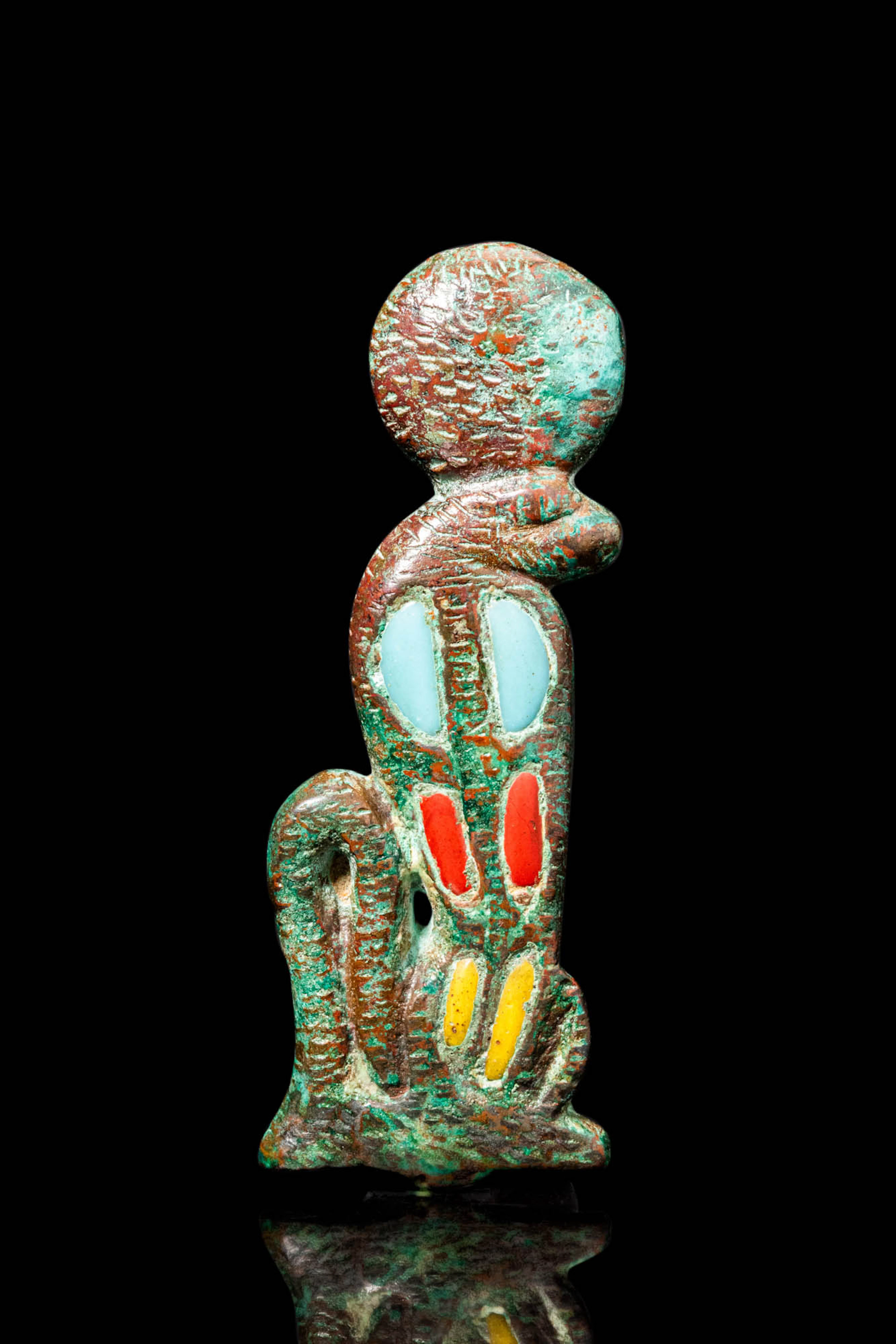
EGYPTIAN BRONZE INLAID APPLIQUE OF URAEUS - MUSEUM EXHIBITED
06/21/2026

€1,623.13
Est.: €1,154.78
OCT 8 | 3:00 PM
¡Lleva tu subasta a coleccionistas de todo el mundo!
Publica ahora€275