





OCT 8 | 3:00 PM

¡Lleva tu subasta a coleccionistas de todo el mundo!
Publica ahoraAl suscribirte, aceptas la política de privacidad. Cancela tu suscripción en cualquier momento.
Barnebys HQ
Brahegatan 10
BOX 5038
114 37 Stockholm
Todas las subastas / Arte, Pintura & obra gráfica / ENGLISH SCHOOL (LATE 16TH CENTURY), A KINSHIP RIDDLE
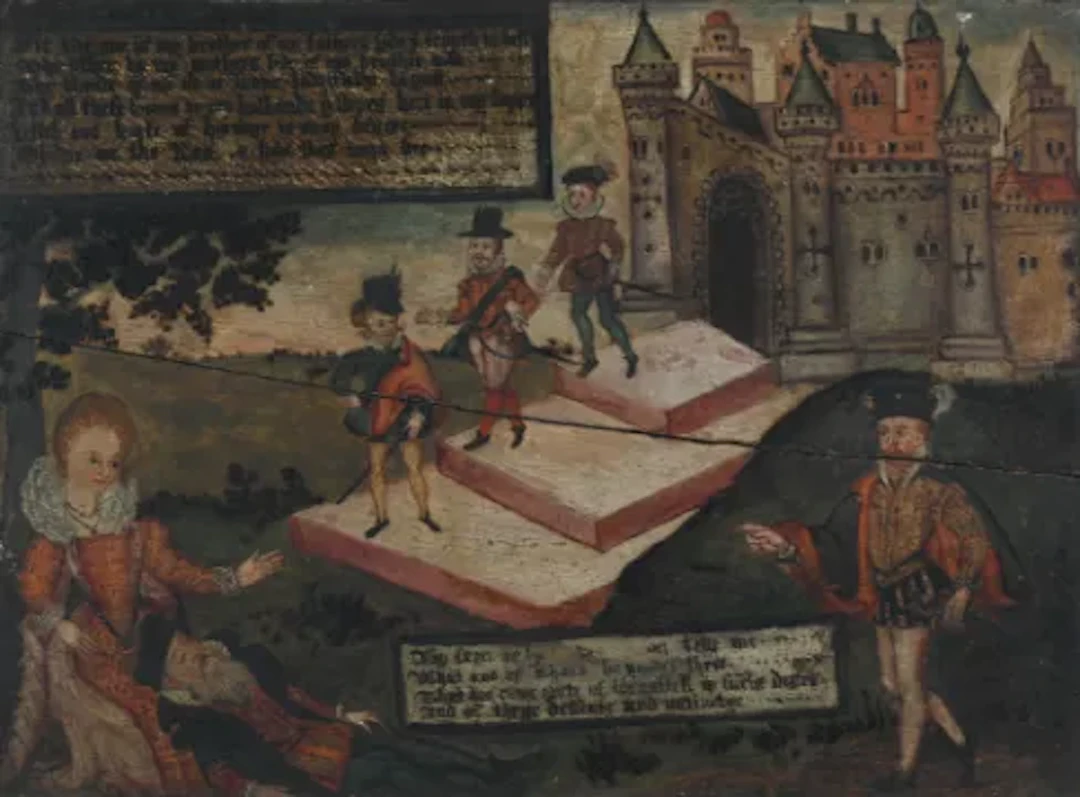
ENGLISH SCHOOL (LATE 16TH CENTURY) A KINSHIP RIDDLE Oil on panel Indistinctly inscribed ‘My faire Lady, I pray you telle me […] /What and of whom be yonder three…/ That doe come oute of the castell in such degree / And of there decente & nativitye....’ (lower centre); further indistinctly inscribed with the riddle ‘Sir the one is my brother at my father’s syde ye trouth to tell / The other by my mothers side is my brother also…/ The thirde is my owne sonne lawfully begott…/ And all these Sonnes to my husbande yt slepes here in my lappe / With out hurte of lynnege in anny degree…/ Showe me the Reason how this maye bee…’ (upper left); later sheets with transcription of riddle and the solution (affixed to the reverse) 30.5 x 41.5cm (12 x 16¼in.) Provenance: Private collection, Shropshire, UK This intriguing painting on panel is a rare example of a sixteenth century kinship riddle picture, a tradition that speaks to the Elizabethan penchant for puzzles, allegories and reason. The viewer is invited to solve the riddle of how the lady’s two half-brothers and her own legitimate son can all be the sons of her husband, who lies sleeping in her lap. Although several possible solutions based on a series of marriages and remarriages have been suggested, the most probable appears to be that ‘The lady’s two half-brothers must have married the daughters of her husband by a former marriage, which made them sons (i.e. sons-in-law) to her husband and brothers to the son of her sister.’[1] Dr Lydan Warner has linked this tradition to the evolving marriage laws of the sixteenth century.[2] While it has been argued that the English examples relate to Netherlandish narrative pictures of the same subject, Warner has pointed out that the differing solutions are dependent on the legal framework within specific regional contexts. It may be however that the divergent traditions emerged from a common root Flemish manuscript riddle.[3] There are a mere handful of known surviving English examples, all of which are housed in prestigious collections. These include The Riddle devoted to Sir William Cecil, now at Hatfield House (sold at Sotheby’s, London, 8 December 2010, lot 14 for £61,250); The Allegorie of a Faire Ladye at The Fogg Art Museum, Cambridge, Massachusetts, datable to the 1570’s (no. 1959.143) and a later example of the 1620’s or ‘30s at Knole, Kent. The present lot shares several compositional similarities to these three, including the two sections of text with slight variations and six figures (five men and one woman) in a landscape with a turreted castle beyond. It has been suggested that a pictorial prototype might have circulated in print form but a surviving example remains to be found.[4] This version appears share a similar textual rendering as well as the charming naivety of the Fogg version. It does also present previously unseen variations; the sons are more separate and they are descending steps, rather than a path, from the castle. Other textual evidence of English riddles identified by Warner, including one that came from Copped Hall (see Country Life, 4 August 1955, p. 253), ‘a curious picture at Epping Inn’ mentioned in a letter to Gentleman’s Magazine in 1789, and two examples with slight differences in the riddle and verse do not seem to match this panel. Nonetheless, the accuracy of the sartorial detailing supports the dating of the present picture to the 1590s. The clothing worn by the figures in this painting would have been in fashion in around the early 1590s, especially the Lady’s squared neckline and dramatic lace ruff. The very short breeches worn by the men date from the late 1580s to the early 1590s, when silhouettes exaggerated youth and physical vigour. The Lady’s husband wears an earlier fashion of a black overgown worn over a doublet with a Tudor-style cap, which would be typical for an older man. Whereas a later pastiche might be likely to homogenise the fashions of a particular period, the precise treatment of clothing for different generations is an idiosyncrasy that one would expect from an original work. The fabrics are likewise convincingly painted in detail, which suggests that this work was painted at the time when these fashions were current. Significantly, while the seventeenth century examples at Knole and Copped Hall address the Lady as ‘Madam’, the earlier known examples begin with ‘My faire Lady’. While the text in the current lot is partially obscured, it appears more likely to correspond with the latter. We are grateful to Prof Karen Hearn and Dr Lyndan Warner for their assistance with the cataloguing of this painting. [1] R. Gibson, The Clarendon Collection, 1977, quoted in K. Hearn (ed.), Dynasties: Painting in Tudor and Jacobean England, 1530-1630, London, 1995, pp. 98-9 [2] L. Warner, ‘Kinship Riddles.’ Genealogy 2022, vol. 6 (2), 43, pp. 1-30. [3] Ibid, 23. [4] E. von Minnigerode, Image and Secrecy in Elizabethan England: Riddles and Self-Fashioning in Courtly Paintings for William Cecil and Chrisopher Hatton, 2022, p.108 (PhD thesis) Condition Report Disclaimer, ENGLISH SCHOOL (LATE 16TH CENTURY), A KINSHIP RIDDLE, ENGLISH SCHOOL (LATE 16TH CENTURY) A KINSHIP RIDDLE Oil on panel Indistinctly inscribed ‘My faire Lady, I pray you telle me […] /What and of whom be yonder three…/ That doe come oute of the castell in such degree / And of there decente & nativitye....’ (lower centre); further indistinctly inscribed with the riddle ‘Sir the one is my brother at my father’s syde ye trouth to tell / The other by my mothers side is my brother also…/ The thirde is my owne sonne lawfully begott…/ And all these Sonnes to my husbande yt slepes here in my lappe / With out hurte of lynnege in anny degree…/ Showe me the Reason how this maye bee…’ (upper left); later sheets with transcription of riddle and the solution (affixed to the reverse) 30.5 x 41.5cm (12 x 16¼in.) Provenance: Private collection, Shropshire, UK This intriguing painting on panel is a rare example of a sixteenth century kinship riddle picture, a tradition that speaks to the Elizabethan penchant for puzzles, allegories and reason. The viewer is invited to solve the riddle of how the lady’s two half-brothers and her own legitimate son can all be the sons of her husband, who lies sleeping in her lap. Although several possible solutions based on a series of marriages and remarriages have been suggested, the most probable appears to be that ‘The lady’s two half-brothers must have married the daughters of her husband by a former marriage, which made them sons (i.e. sons-in-law) to her husband and brothers to the son of her sister.’[1] Dr Lydan Warner has linked this tradition to the evolving marriage laws of the sixteenth century.[2] While it has been argued that the English examples relate to Netherlandish narrative pictures of the same subject, Warner has pointed out that the differing solutions are dependent on the legal framework within specific regional contexts. It may be however that the divergent traditions emerged from a common root Flemish manuscript riddle.[3] There are a mere handful of known surviving English examples, all of which are housed in prestigious collections. These include The Riddle devoted to Sir William Cecil, now at Hatfield House (sold at Sotheby’s, London, 8 December 2010, lot 14 for £61,250); The Allegorie of a Faire Ladye at The Fogg Art Museum, Cambridge, Massachusetts, datable to the 1570’s (no. 1959.143) and a later example of the 1620’s or ‘30s at Knole, Kent. The present lot shares several compositional similarities to these three, including the two sections of text with slight variations and six figures (five men and one woman) in a landscape with a turreted castle beyond. It has been suggested that a pictorial prototype might have circulated in print form but a surviving example remains to be found.[4] This version appears share a similar textual rendering as well as the charming naivety of the Fogg version. It does also present previously unseen variations; the sons are more separate and they are descending steps, rather than a path, from the castle. Other textual evidence of English riddles identified by Warner, including one that came from Copped Hall (see Country Life, 4 August 1955, p. 253), ‘a curious picture at Epping Inn’ mentioned in a letter to Gentleman’s Magazine in 1789, and two examples with slight differences in the riddle and verse do not seem to match this panel. Nonetheless, the accuracy of the sartorial detailing supports the dating of the present picture to the 1590s. The clothing worn by the figures in this painting would have been in fashion in around the early 1590s, especially the Lady’s squared neckline and dramatic lace ruff. The very short breeches worn by the men date from the late 1580s to the early 1590s, when silhouettes exaggerated youth and physical vigour. The Lady’s husband wears an earlier fashion of a black overgown worn over a doublet with a Tudor-style cap, which would be typical for an older man. Whereas a later pastiche might be likely to homogenise the fashions of a particular period, the precise treatment of clothing for different generations is an idiosyncrasy that one would expect from an original work. The fabrics are likewise convincingly painted in detail, which suggests that this work was painted at the time when these fashions were current. Significantly, while the seventeenth century examples at Knole and Copped Hall address the Lady as ‘Madam’, the earlier known examples begin with ‘My faire Lady’. While the text in the current lot is partially obscured, it appears more likely to correspond with the latter. We are grateful to Prof Karen Hearn and Dr Lyndan Warner for their assistance with the cataloguing of this painting. [1] R. Gibson, The Clarendon Collection, 1977, quoted in K. Hearn (ed.), Dynasties: Painting in Tudor and Jacobean England, 1530-1630, London, 1995, pp. 98-9 [2] L. Warner, ‘Kinship Riddles.’ Genealogy 2022, vol. 6 (2), 43, pp. 1-30. [3] Ibid, 23. [4] E. von Minnigerode, Image and Secrecy in Elizabethan England: Riddles and Self-Fashioning in Courtly Paintings for William Cecil and Chrisopher Hatton, 2022, p.108 (PhD thesis), Provenance:, [1], [2], [3], The Riddle devoted to Sir William Cecil, The Allegorie of a Faire Ladye, [4], Country Life, Gentleman’s Magazine, The Clarendon Collection, Dynasties: Painting in Tudor and Jacobean England, 1530-1630, Genealogy, Image and Secrecy in Elizabethan England: Riddles and Self-Fashioning in Courtly Paintings for William Cecil and Chrisopher Hatton, Condition Report Disclaimer
Estimación:€3,536.8
Ir a la subastaVer todos los artículos deDreweattsoArte, Pintura & obra gráfica
Estimación:
€3,536.8
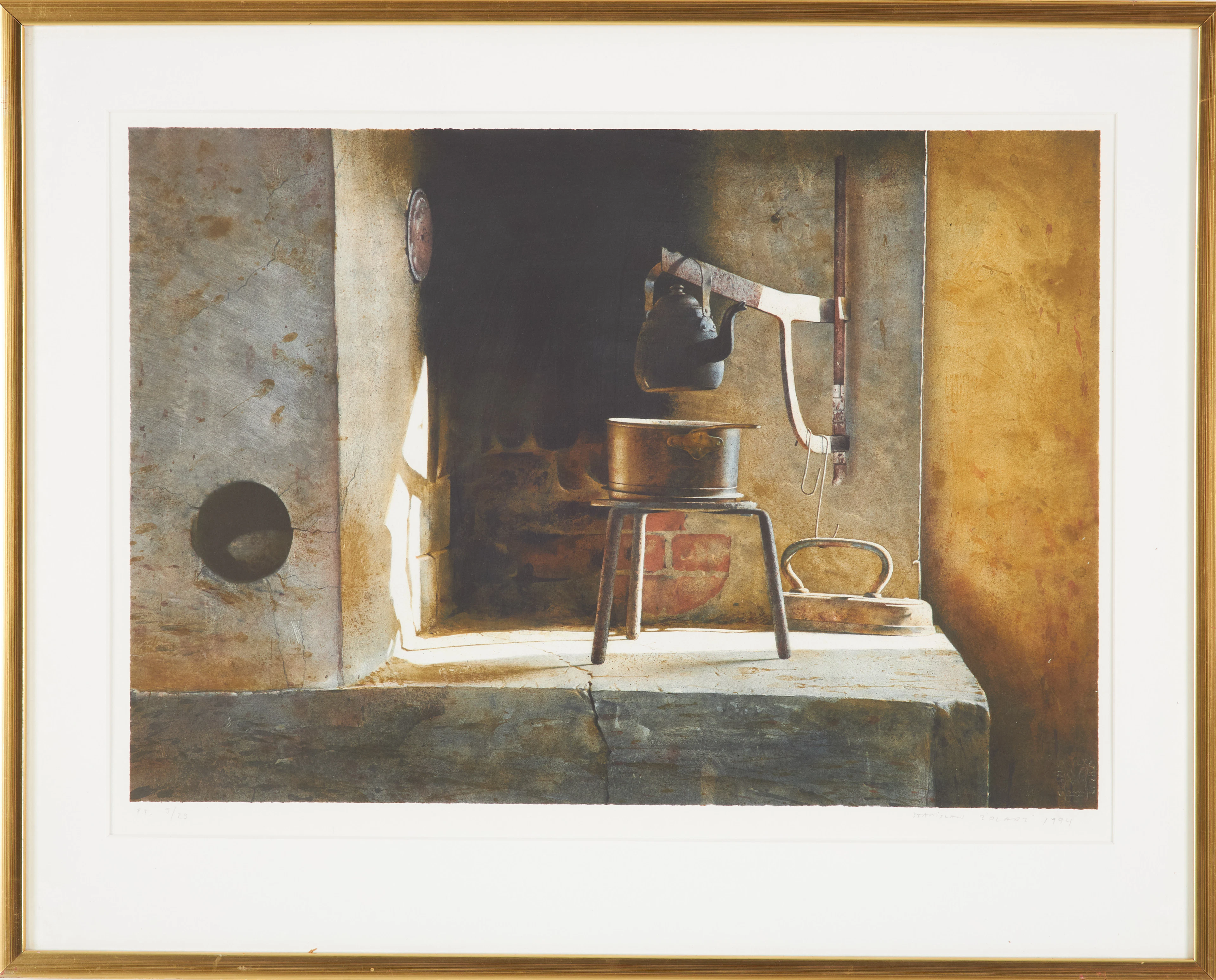
STANISLAW ZOLADZ. Interiör med bl.a. kaffekanna, signerad, daterad
10/06/2026
€44.64
Est.: €133.21
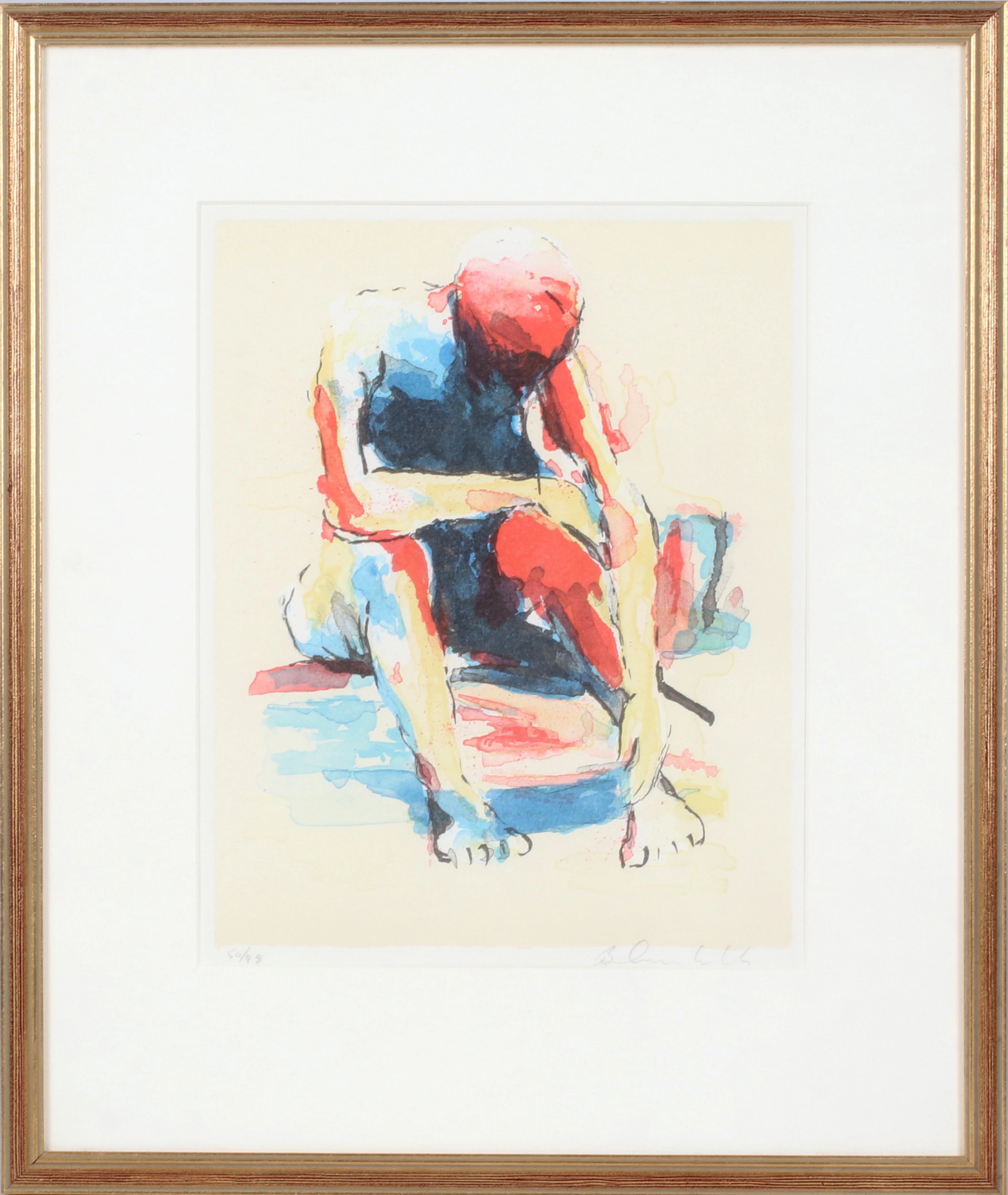
BJÖRN AUREBEKK. Sittande kvinna, litografi, signerad och numrerad 50/99.
10/06/2026
€26.78
Est.: €44.4
OCT 8 | 3:00 PM
¡Lleva tu subasta a coleccionistas de todo el mundo!
Publica ahora