

OCT 8 | 3:00 PM

¡Lleva tu subasta a coleccionistas de todo el mundo!
Publica ahoraAl suscribirte, aceptas la política de privacidad. Cancela tu suscripción en cualquier momento.
Barnebys HQ
Brahegatan 10
BOX 5038
114 37 Stockholm
Todas las subastas / Cristal / Roman Glass Aryballos, Aubergine Body with Pale Twin Trail Handles

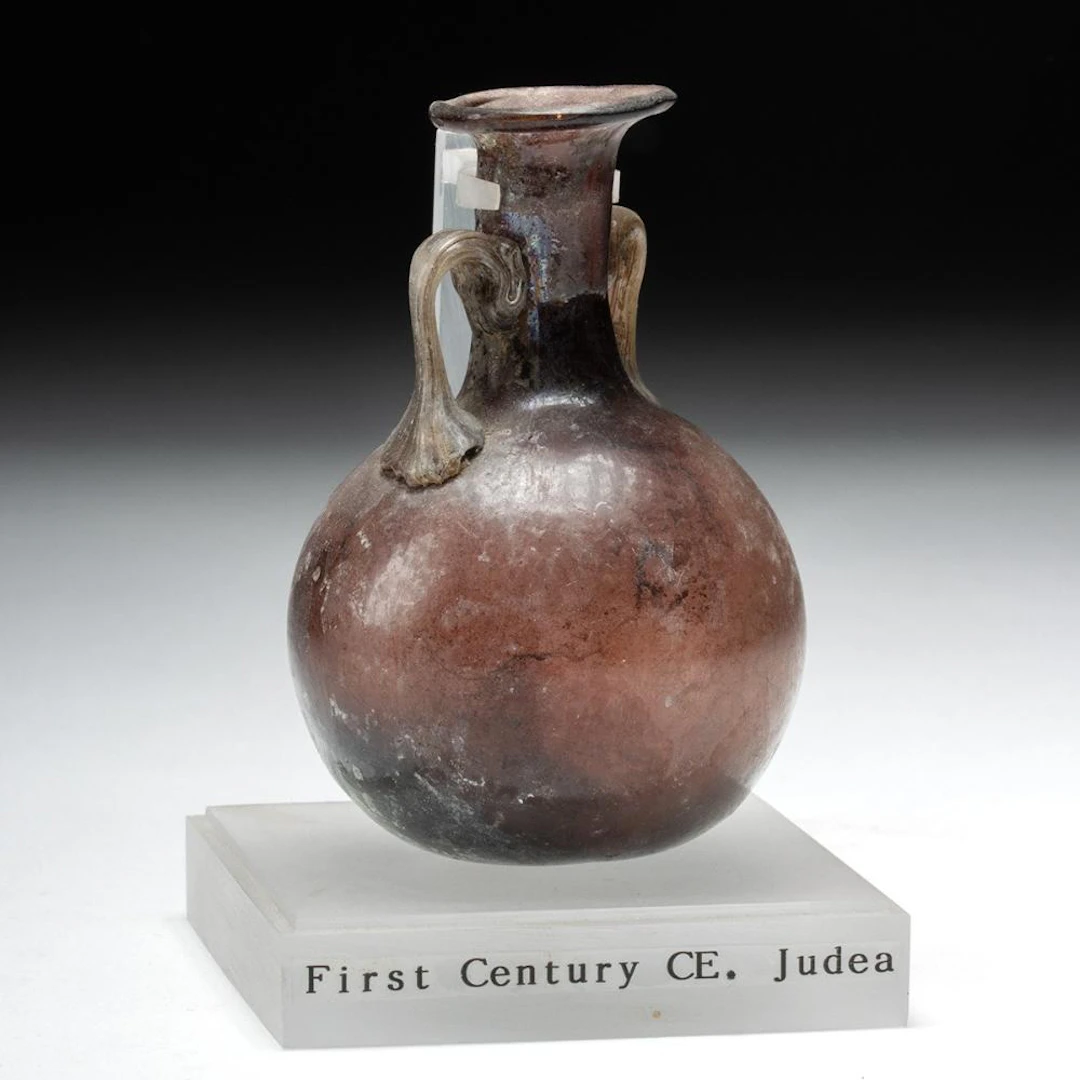
Roman, Imperial period. A small free-blown aryballos of translucent aubergine glass. Its spherical body glows plum-brown where light passes through it. A cylindrical neck rises to a folded collar rim, and the underside is pushed in to form a shallow base. Two thick trailed handles of pale gray glass, almost smoke-colored against the dark body, rise from the shoulder and loop back to grip the neck. Each is pressed flat into a broad pad where it meets the shoulder. Flasks of this shape probably held scented oil for bathing and the palaestra. The paired handles allowed a cord or metal chain to be passed through so the flask could hang from the wrist alongside a strigil. The contrast between the dark body and the pale handles is deliberate, an economical bit of glassblower's elegance. Silvery weathering softens areas of the surface. The glass aryballos is a Roman reworking of a Greek form. Archaic and Classical aryballoi were small ceramic oil flasks. In the first century CE, after glassblowing spread from the Syro-Palestinian coast, glassworkers turned the shape into a globular blown bottle with two handles, often called "dolphin" handles because of their curving profile. In the standard typology it is known as Isings form 61. Bathers carried these flasks on a ring or chain together with a bronze strigil, the curved scraper used to remove oil, sweat, and dust after exercise. The form stayed in use well into the third century across the Roman world. Item # 205217
Estimación:€535.66
Ir a la subastaVer todos los artículos deArtemis Fine ArtsoCristal
Estimación:
€535.66
OCT 8 | 3:00 PM
¡Lleva tu subasta a coleccionistas de todo el mundo!
Publica ahora
€1,800
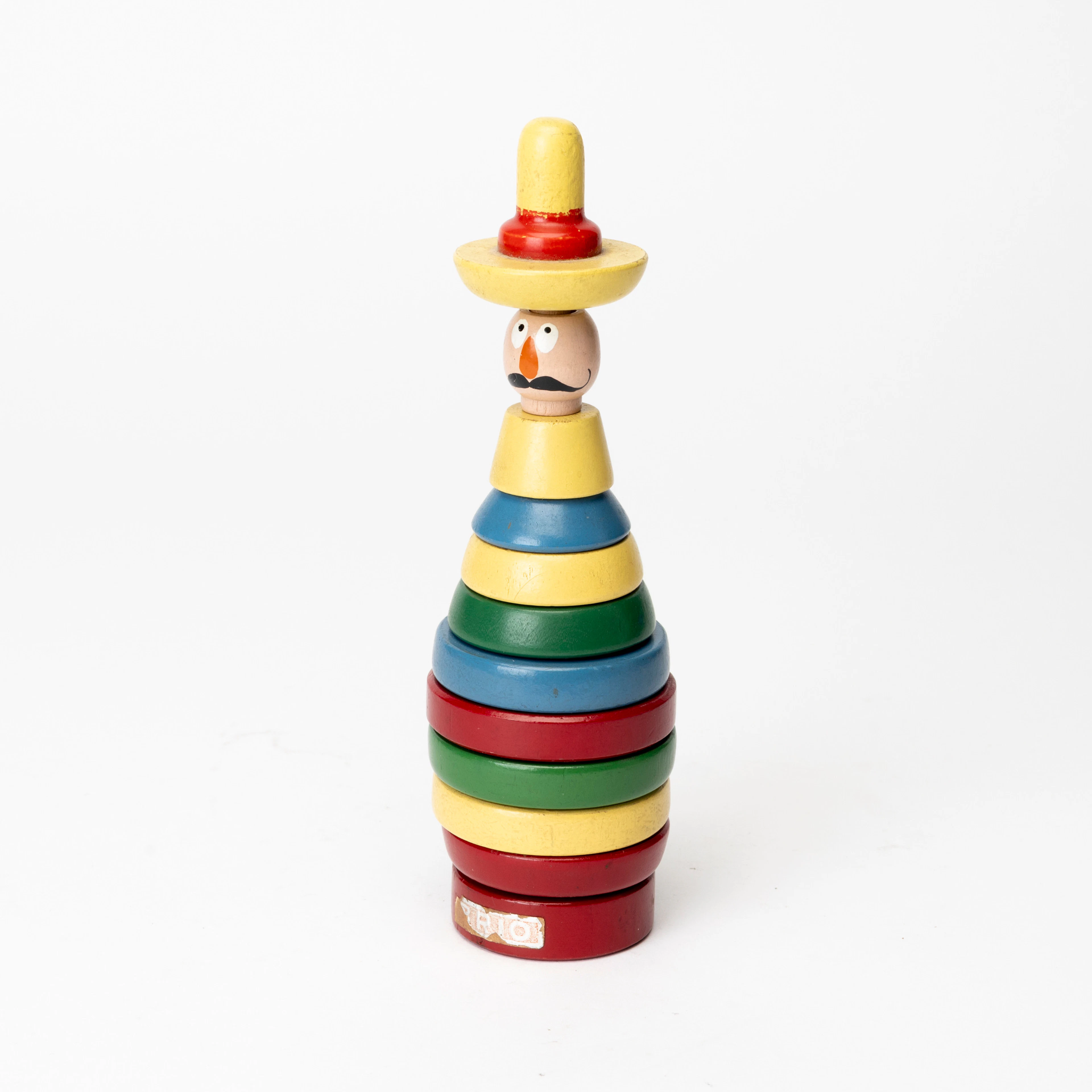
LEKSAK, trä, Man med hatt, BRIO, 1900-talets mitt.
10/06/2026
€53.57
Est.: €106.56